A diagnosis of advanced colon cancer can bring a flood of emotions – fear, uncertainty, sadness, and many difficult decisions. While treatment often focuses on fighting the disease, there may come a time when the focus shifts from curing to comfort. That’s where hospice care can make a meaningful difference.
Hospice is not about giving up. It’s about choosing comfort, dignity, and quality of life when time matters most.
Hospice care is specialized medical care for individuals facing a life-limiting illness, typically when a physician determines a patient may have six months or less to live if the illness runs its normal course. For patients with advanced colon cancer, hospice focuses on comfort rather than curative treatment.
The goal is simple: help patients live as fully and comfortably as possible.
Hospice care can be provided in a patient’s home, an assisted living facility, a nursing home, or a hospice inpatient unit. Wherever care is delivered, the focus remains the same – supporting both the patient and their loved ones.
Colon cancer, especially in later stages, can bring complex and uncomfortable symptoms. Our interdisciplinary hospice care team is specially trained to manage these symptoms effectively.
Common symptoms may include:
Our hospice team works closely with patients to create individualized care plans that prioritize comfort. Through medications, therapies, and supportive care, they help control pain and other distressing symptoms, often improving quality of life significantly.
A colon cancer diagnosis doesn’t only affect the body – it impacts the whole person. Patients may struggle with anxiety, depression, fear of the unknown, or unfinished business.
Hospice provides holistic care, including:
Social workers and chaplains help patients and families process feelings, find meaning, and prepare emotionally for what lies ahead.
For many patients with advanced colon cancer, maintaining independence and dignity becomes a top priority. Hospice respects each patient’s wishes and goals.
Whether that means staying at home, managing pain well enough to enjoy time with grandchildren, or simply having peace and quiet, hospice aligns care with what matters most to the individual.
It may be time to explore hospice if:
Having the hospice conversation early allows patients and families to receive the full benefit of support – rather than waiting until the final days.
Choosing hospice for colon cancer is not about losing hope. It’s about redefining hope – hope for comfort, meaningful moments, and support during one of life’s most challenging seasons.
Hospice empowers patients to live their remaining time with dignity, surrounded by compassionate care and the people who matter most.
If you or a loved one is facing advanced colon cancer, speaking with a healthcare provider about hospice options can be an important and empowering step.
End-of-life conversations are some of the most important moments in healthcare. When introduced early and with intention, hospice care empowers patients and families to focus on comfort, dignity, and what matters most.
Hospice is not about giving up. It is about shifting the focus to symptom management, quality of life, and coordinated support for patients facing serious, life-limiting illness.

Medical professionals play a critical role in normalizing hospice as a supportive service rather than a last-minute decision. Early, compassionate conversations allow patients to make informed choices instead of reacting during a crisis.
Evidence shows that:
Effective hospice conversations:
Hospice teams partner closely with medical professionals to support symptom control, caregiver education, advance care planning, and emotional and spiritual well-being.
If you are caring for patients with advanced illness, frequent hospitalizations, or increasing symptom burden, we are here to support you. Our hospice team is available to collaborate, provide eligibility guidance, and help facilitate timely referrals.
Let’s start the heart-to-heart conversation before a crisis occurs.
References
Centers for Disease Control and Prevention. (2022). Place of death: United States. https://www.cdc.gov/nchs/products/databriefs/db473.htm
Teno, J. M., et al. (2013). Change in end-of-life care for Medicare beneficiaries. JAMA, 309(5), 470–477. https://doi.org/10.1001/jama.2012.207624
Bringing Comfort, Peace, and Togetherness to Every Setting
The holidays are a time for family, reflection, and love. For many individuals living in assisted living or skilled nursing facilities, home is where they are now—surrounded by compassionate caregivers and familiar faces.
Hospice care brings an added layer of comfort and support to make this season meaningful for everyone.

Hospice doesn’t replace the care already being provided—it complements it.
Together, facility staff and hospice professionals form one care team focused on:
Many families wait until after the holidays to consider hospice care—
but the truth is, this is when the support can make the biggest difference.
Hospice helps:
It may be time to explore hospice care if your loved one has:

Early introduction allows more time for meaningful support and improved quality of life.
If you’re unsure whether hospice is appropriate, talk with your facility nurse, social worker, or physician.
Our hospice team can provide a no-obligation consultation to explain available services, answer questions, and ensure comfort—through the holidays and beyond.
This holiday season, give your loved one the gift of comfort and peace.
Hospice helps make every moment matter—right where they are.
We don’t often think about the importance of staying hydrated. We may go for hours and hours without a sip. We may wait until we’re thirsty to get a drink.
Generally, you should drink ⅓ of your weight (in pounds) in ounces of water daily. For example, if you weigh 150 pounds, drink 50 ounces of water (or other hydrating beverages) daily.
Many health problems and medications can affect the amount of water we need, so it’s best to talk with your doctor about your specific needs.

As we get older, our ability to regulate the amount of water in our body declines. What’s more, our lifestyle and habits may change over time. We may have been more active, naturally drinking more water. But now we don’t exercise as much or at high intensity.
We may have commuted to work every day with a drink in the cup holder. We sat at our desks with a tumbler of water within reach, a constant reminder to take a drink.
For seniors, we need to maintain a 55% level of water in our bodies. Dehydration, even in mild cases, can harm health and exacerbate existing medical conditions. Symptoms like confusion, dizziness, fatigue, joint pain and constipation can result from inadequate hydration.
The importance of staying hydrated extends beyond everyday life for seniors. It becomes even more critical when recovering from an illness, injury, or medical procedure. During these times, the body requires additional support to heal and regain strength and adequate hydration plays a vital role.
Some of the ways hydration helps you heal include:

Many of us take multiple medications, some of which may cause an increase in urination. What’s more, many chronic health conditions, like diabetes and kidney disease, can contribute to this loss of fluids. Losing too much fluid is even more dangerous in summer.
During the hotter months, the combination of higher temperatures and perspiration can lead to a greater risk of dehydration. Heat-related illnesses like heat exhaustion and heat stroke are also more common in seniors and can be life-threatening.
Look for shade, go into an air-conditioned building, and avoid prolonged exposure to heat and sun when temperatures and humidity rise.
Drinking enough water isn’t the only way to prevent dehydration. Other hydrating beverages and foods are also options.
Foods like fruits and vegetables with high water content can help also us stay hydrated: strawberries, tomatoes, watermelon, celery, and cucumbers. Beverages like herbal teas can increase hydration too. But it’s essential to limit caffeine and alcohol. They can have a diuretic effect.
Remember that staying hydrated is important at any age but is critical for seniors. Staying hydrated gives our bodies the necessary support to heal, manage medications, boost immune function and regain energy and mobility. Be sure to talk with your doctor about their hydration recommendations for your needs.
References:
https://www.ncbi.nlm.nih.gov/pmc/articles/PMC2908954/
https://www.ncoa.org/article/how-to-stay-hydrated-for-better-health
Watching someone you love suffer from Alzheimer’s or another memory debilitating illness is incredibly difficult, and it can be even more challenging to decide when it’s time to consider hospice care. Here, we are sharing five signs it may be the right time to consider the extra support of hospice care for an Alzheimer’s patient.
The Functional Assessment Staging (FAST) Scale is a tool used to determine if changes in a patient’s condition are related to Alzheimer’s disease or another condition. If due to Alzheimer’s, the changes will occur in sequential order. Alzheimer’s disease-related changes do not skip FAST stages.
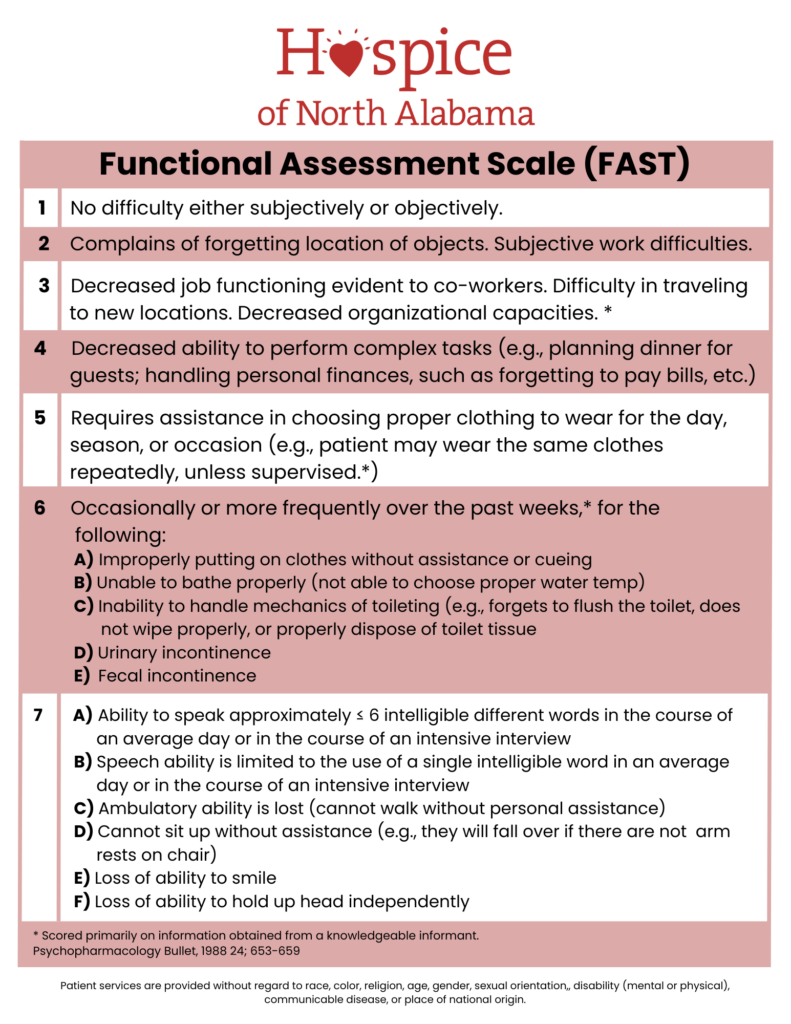
This means a person is no longer able to get around on their own. For example, they require assistance getting from room to room.
Without assistance, you may notice they put their shoes on the wrong feet or their day-time ‘street’ clothes on over their pajamas. They are also unable to bathe without assistance.
This includes urinary or fecal incontinence or both.
This may begin as the patient only saying 5-6 words per day and gradually reduce to only speaking one word clearly until they can no longer speak or communicate at all. This will also include the inability to smile.

Hospice care is for patients with a life limiting illness and a life expectancy of six months or less. The main focus is to manage pain and symptoms and ultimately keep the patient comfortable. When you choose hospice for your loved one, their care team can help you to understand what to expect in the final stages of Alzheimer’s. They will also provide support to you and the rest of your family throughout the end-of-life process.
If you would like more information on hospice care for Alzheimer’s patients, please contact us. We are here to answer any questions you may have.